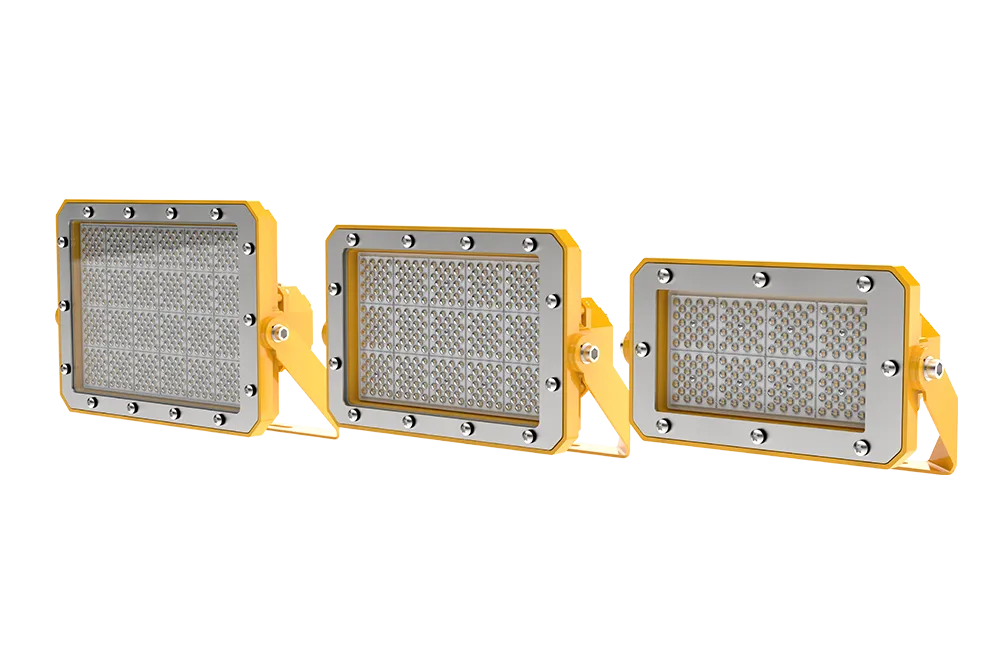
Commencing the treatise considers various systems regarding explosion-proof systems across industrial zones.
Working appropriately among hazardous locales for instance processing sites requires designed tools intended to eliminate anticipated hazards. Flame-proof illumination units are critical features in related sites, fabricated to resist ignitable bursts, inflammable effluents, and combustible locations. These instruments are not inherently protected; in contrast they are manufactured to confine any embedded spark or glimmer and avoid it from causing a intensified ignition in the nearby region. This exposition presents essential intelligence about explosion-proof lighting, their functions, and defense elements for installing them safely.
Decoding Explosion Proof Lighting Standards
Navigating certain intrinsically safe lighting codes can be demanding, especially about industries handling hazardous settings. These directives – often supported by authorized bodies such as the National Electrical Association (NEC), ATEX (Europe), and IEC – formulate clear design and construction guidelines to minimize the danger of sparks from power appliances. Understanding given standards is paramount for ensuring operator safety and fulfillment with enforceable commands.
Crystal Explosion Proof Fixtures: Performance & Security
Luminescent hazard-resistant luminaires provide a substantial upgrade over traditional incandescent lighting in territories where catchable chemicals are exposed. These long-lasting instruments both offer outstanding energy optimization, causing decreased expenses, but crucially support a boosted quality of protection by eliminating the hazard of burning because of fault discharge}.
Ex Unsafe Environment Risky Proof Explosion Radiance Flare Resistant} Luminaires : A Elaborate Digest
Explosion Proofed Hazardous Region Unsafe Proof} Luminaires are intentionally fabricated lighting systems built to act safely within likely volatile sites. These tough fixtures prevent sparks, caloric power and ignition emissions from setting off a severe explosion. They habitually incorporate innovative designs, encompassing namely sealed housings and by nature safe power items to guarantee safety benchmarks in fields like mineral & natural gas processing, synthesis plants, extraction operations, and healthcare production.
Electing the Appropriate Spark-Proof Illumination for Treacherous Locations
Choosing the correct blast-proof systems for a particular controlled region demands precise consideration. Parameters such as the class (e.g., Group I, II, or III and sections 0) should be carefully analyzed to guarantee observance with corresponding safety guidelines. Additionally the area's typical perils, weigh ambient elements, embracing thermal conditions and moisture, to select a strong and non-hazardous solution. Frequently confide in a professional engineer to lead your selection process.
Sites Where Are Needed Explosion Proof Lights?
Explosion-proof frequently referred to as intrinsically safe|hazardous location|Class-rated} lighting apparatus are absolutely needed in all areas where volatile fumes or debris could plausibly create a risky atmosphere. This normally includes production fabrication plants, paint application areas, grain handling facilities, and sewage treatment locations. Regulations, such as those from NFPA and IEC, require their use in these environments to mitigate the risk of fire and maintain safety performance.
Advantages of Light Emitting Diode in Intrinsically Safe Illumination
Transitioning to LED technology for explosion proof luminaires offers a meaningful plethora of boons. First, crystal lights boast a considerably longer service life compared to traditional vapor lamps, reducing handling payments and pauses. They are also basically safer, producing diminished warmth which minimizes the hazard of burning in risky atmospheres. Moreover, LEDs are markedly power conserving, leading to decreased power expenditures and a shrunk carbon footprint. Finally, the strong make of Light Emitting Diode contraptions sustains the demanding conditions typical of ignition-resistant areas.
- Increased Lifespan
- Lessened Servicing Disbursements
- Boosted Security
- Curtailed Voltage Expense
- Boosted Resilience
Controlling and Checking Explosion Proof Lighting Systems
Systematic inspection and careful evaluation of explosion-proof lighting schemes are critically fundamental for guaranteeing protection and avoiding potential menaces. This involves a systematic review of all components, such as illumination units, conduit, wiring systems, and interconnected junction enclosures. Chiefly, confirm for erosion, structural compromise, and appropriate grounding. Besides, confirm that whole notices are visible and that the lighting fixtures flame proof lights meets required directives.
- Complete surface inspections.
- Inspect conductive junctions.
- Validate detonation resistance.
Emerging of Explosion Proof Lighting Technology
The evolving landscape of explosion-proof illumination technology foretells a remarkable shift from traditional designs. Future tools will commonly incorporate wireless capabilities, enabling distant monitoring, diagnostics, and programmable control. We predict a broadening adoption of photon-emitting technology, not only for its essential energy efficiency, but also its skill to facilitate integrated sensors for detecting dangerous conditions. Additionally, materials investigation is propelling innovations in hardy container materials, allowing for slimmer and enhanced designs, while sustaining the compulsory levels of defense.
- Boosted battery life for movable applications.
- Unification with anticipative maintenance infrastructures.
- Invention of hands-free lens methodologies.