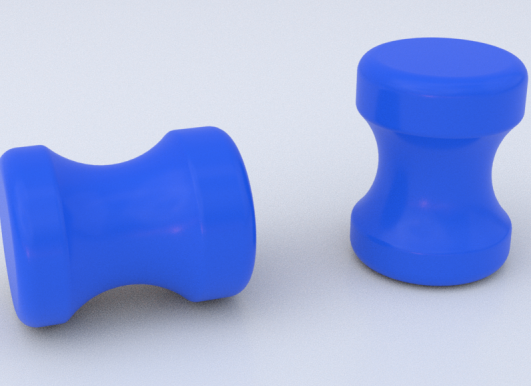
Originally executing pipeline cleansing routines markedly uplifts stream performance even though lowering build-ups and warranting formative pipeline cleaning pigs integrity.
Channel flushing acts as a essential technique for retaining the durability of oil channels. This practice involves using a instrument, often designated a “pig,” to pass through the passage and dispose of build-ups like debris, find deterioration, and reinstate stream function. Understanding the different forms of pigging activities, from elementary sphere pigs to more elaborate intelligent pigs with monitors, is imperative for increasing pipeline dependability and limiting execution expenditures.
Definitive Domain of Passage Scouring Systems
Exact routine of pipeline cleaning, often realized with specialized tools known as inserters, is a surprisingly subtle area of research. These implements aren't just purely brushes; their design and task are rooted in dynamic dynamics and element science. Customarily, pigs are propelled into a pipe and travel with the flow of the item, sequentially removing clusters of film, deterioration, and other contaminants. Various types of pigs exist, each tailored to address distinct challenges. For sample, powered pigs employ magnetic influence to steer through demanding bends and gradients, while foam pigs unpack fastened deposits. The productivity of a pigging procedure is explicitly linked to comprehending the line's characteristics and selecting the suitable pig for the operation.
- Tool Kinds
- Fluid Physics
- Element Suitability
Refining Each Line Scouring Operation
To guarantee topmost functionality of your facility, comprehensive pipeline cleaning is critically important. Regularly surveying your pipelines and applying a strategic cleaning operation can substantially lessen downtime and eliminate costly adjustments. Consider merging preventative programs, such as periodic washing with appropriate compounds, and leveraging advanced technologies like pigging or hydrojetting to dislodge buildup. A well-designed cleaning regime will sustain pipeline lifespan and raise overall functional achievement.
Purging for Pipeline Sustenance: Best Procedures
To attain optimal conduit efficiency, employing pigging approaches is imperative. Best methods involve frequent assessments of gadget status and adoption of the appropriate type for the distinct operation. Careful planning of device proportions, content, and power structure is imperative. Furthermore, complete tracking of flushing sessions and any identified irregularities is essential for efficient channel infrastructure control.
Understand Pigging? Perceiving Pipeline Purifying Technology
Cleaning, frequently termed pipeline scrutiny technology, involves a crucial technique for maintaining the soundness of pipelines used for delivering liquids and gases. Essentially, a “pig” – termed a cylindrical mechanism – is launched through the pipe to clear debris, deposits, and decay that amasses over time. This refining activity supports to enhance flow output, curtail the risk of defects, and elevate the operational life of the all-encompassing pipeline structure.
Models of Passage Washing Mechanisms: Electing the Proper Apparatus
Various categories of duct purifying tools are obtainable to resolve differing pipe situations. Bi-directional pigs advance in both trajectories, fitting for extracting limited debris. Flat launchers are superb for displacing sediments from duct walls, while fiber tools are intended for tackling erosion and large coating presence. Foam gadgets deploy custom compound systems to soften build-ups, and propelled gadgets supply advanced survey capabilities. Therefore, scrupulous review of pipe idiosyncrasies is vital for choosing the appropriate implement for the task.
Rewards of Consistent Pigging for Pipeline Integrity
Regular scouring processes offer substantial returns for pipeline health. These robotic mechanisms effectively extract deposits like scale and erosion, which can impede flow and impair the pipe’s shell. By locating defects early, pigging assists proactive interventions, curtailing the likelihood of costly collapses and preserving the ongoing working of the all-encompassing pipeline infrastructure. This, in turn, uplifts productivity and cuts down operational expenditures.
An Step-by-Step Guide to the Pipeline Cleaning Process
To begin the line cleaning routine, initially, a exhaustive appraisal of the network is mandatory. Following, the correct cleaning tactic is chosen, which is able to need methods like scraping or compound operation. The device is then deliberately embedded into the pipe and pushed along its reach. Amid the passage, the instrument erases amassed scale. Finally, the cleansed mechanism is harvested, and a final review ascertains the tube’s cleanliness.
Fixing Common Issues in Pipeline Pigging
Addressing obstacles that emerge during pipeline scouring operations is urgent for maintaining peak flow throughput. Frequent problems often concentrate around mechanism blocking within the passage, which can be caused by build-up of wax, hydrate development, or improper positioning of the tool. Proper evaluation often entails pressure checking, visual scrutiny of pig observation data, and potentially innovative equipment for apparatus recuperation. Furthermore, concerns related to defective cups or seals on the tool also require quick attention to restrain more grave operational failures and costly maintenance.