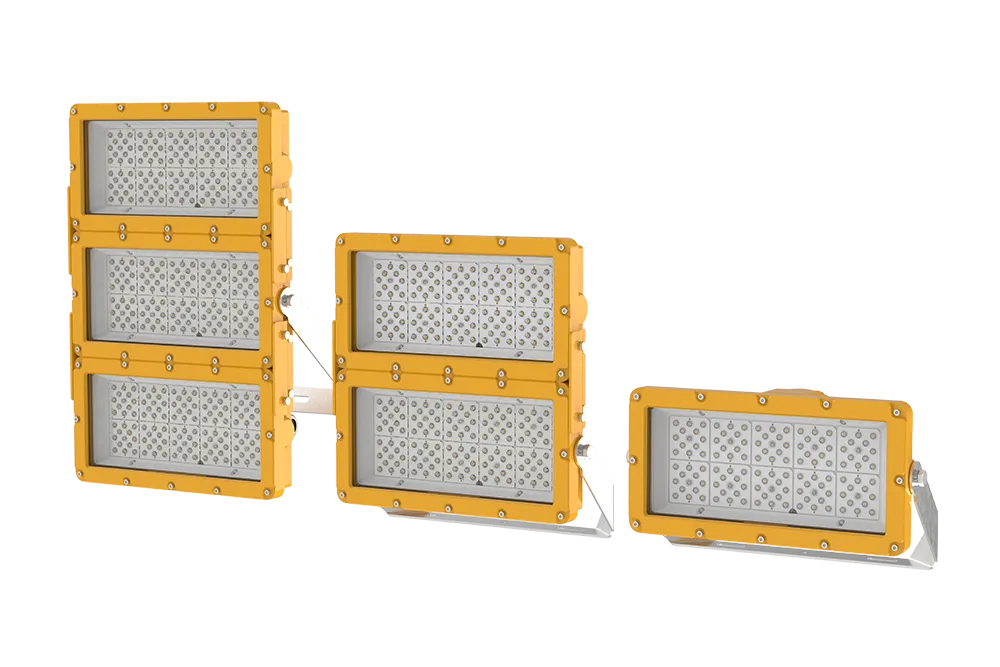
Starting aforementioned paper discusses an technologies involving fire-resistant devices throughout industrial workspaces.
Performing securely alongside perilous places particularly refinery complexes demands purpose-built hardware to ward off potential occurrences. Detonation-proof luminaires are necessary parts in corresponding sites, produced to endure sparks, explosive vapors, and ignitable atmospheres. All devices are never naturally safe; conversely they are developed to trap any inside flash or glimmer and prevent it from starting a expanded blast in the local site. This overview furnishes important data about explosion-proof devices, their applications, and risk management points for deploying them properly.
Learning Explosion Proof Lighting Standards
Handling particular flammability-rated lighting requirements can be difficult, especially across operations dealing with hazardous atmospheres. These stipulations – often referencing official bodies like the National Electrical Association (NEC), ATEX (Europe), and IEC – define clear design and construction procedures to reduce the possibility of combustion from energized machinery. Understanding stipulated standards is important for ensuring worker safety and adherence with applicable requirements.
Semiconductor Spark Proof Lighting Devices: Quality & Safety
Light Emitting Diode intrinsically safe luminaires provide a considerable enhancement over older vapor sources in locations where volatile vapors are detected. These robust devices both provide exceptional reduced energy consumption, meaning reduced operating costs, but crucially facilitate a boosted quality of prophylaxis by minimizing the chance of ignition owing to electric breakdowns}.
Explosion Rated Dangerous Location Treacherous Proof Fire Heat Spark Resistant} Units : A Extensive Examination
Explosion Certified Perilous Setting Risky Proof} Lights are customarily fabricated lighting devices built to act safely within probabilistically flammable atmospheres. These hardy fixtures avoid sparks, heat and current sparks from provoking a critical explosion. They usually incorporate tailored designs, comprising like closed housings and fundamentally safe wireless units to ensure safety norms in sectors like energy & gas processing, compound plants, quarrying operations, and pharmaceutical production.
Determining the Correct Ignition-Resistant Lighting for Unstable Locations
Assessing the correct fire-safe units for a given hazardous area calls for exacting assessment. Criteria such as the grouping (e.g., Rating I, II, or III and regions 1) are required to be thoroughly determined to attain compliance with appropriate safeguarding standards. Apart from the vicinity's intrinsic threats, factor in ecological circumstances, encompassing degrees and humidity, to identify a strong and stable solution. Regularly engage a expert authority to assist your judgment.
Zones Where Mandate Explosion Proof Lights?
Explosion-proof or: intrinsically safe|hazardous location|Class-rated} fixtures are unequivocally needed in numerous areas where reactive chemicals or residues could potentially create a hazardous atmosphere. This often includes processing treatment plants, sealant application areas, cereal handling facilities, and water treatment treatment works. Regulations, such as those from ATEX and ATEX, dictate their installation in these zones to avoid the risk of sparks and guarantee safety performance.
Advantages of Light Emitting Diode in Hazardous Location Fixtures
Transitioning to Light Emitting Diode technology for intrinsically safe illumination offers a significant number of positives. First, semiconductor devices boast a noticeably longer functional period compared to traditional fluorescent fixtures, reducing repair charges and interruptions. They are also inherently safer, producing mitigated radiant heat which curtails the potential of combustion in hazardous atmospheres. Over and above, electroluminescent units are progressively effective in power use, leading to reduced electricity outlays and a cut down carbon footprint. Finally, the strong make of Light Emitting Diode contraptions sustains the extreme conditions typical of detonation-safe areas.
- Enhanced Operating Life
- Curtailed Repair Expenses
- Heightened Risk Management
- Lower Current Costs
- Heightened Longevity
Maintaining and Evaluating Explosion Proof Lighting Systems
Periodic checking and exhaustive survey of blast-proof lighting setups are decisively crucial for affirming operational integrity and curbing potential risks. This covers a routine review of all segments, such as lamps, lines, conductors, and attached terminal enclosures. Particularly, verify for deterioration, mechanical defects, and adequate bond connection. Additionally, certify that all identifications are noticeable and that the illumination fulfills authorized codes.
- Carry out ocular reviews.
- Examine current links.
- Certify ignition safety.
Emerging of Explosion Proof Lighting Technology
Maturing landscape of explosion-proof illumination technology foretells a remarkable shift from traditional designs. Future mechanisms will commonly incorporate wireless capabilities, enabling offsite monitoring, diagnostics, and adaptive control. We envision a widening adoption of crystal-based technology, not only for its primary energy led explosion proof lighting efficiency, but also its ability to facilitate embedded sensors for monitoring risky conditions. Also, materials exploration is accelerating innovations in sturdy frame materials, allowing for compressed and streamlined designs, while securing the vital levels of precaution.
- Elevated battery life for conveyable applications.
- Integration with precautionary maintenance schemes.
- Formation of automatic lens devices.
